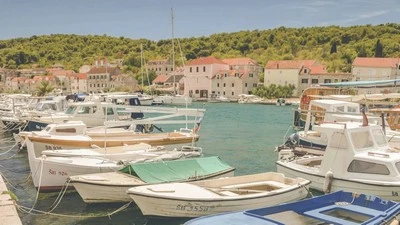
Brodarica is a small touristic town near a variety of historical, cultural and entertainment facilities for all ages. The Old Town of Šibenik, historic sites under UNESCO protection, the Island of Krapanj - the lowest inhabited island in Croatia,
Krka National Park and a beautiful promenade overlooking the Šibenik Canal are just some of the nearby pearls that you can explore during your stay in Brodarica.
Brodarica stretches along a 4 km coastal strip. The most notable large public beaches in Brodarica are:
A small local beach, with natural shade, great for children, and for adults there is also a beach bar offering drinks, hot sandwiches and homemade pancakes, 200 m from the accommodation, i.e. 4 minutes' walk.
Located near our apartments, 200 meters away, i.e. 5 minutes on foot, you can rent sup boards and there is a water park for children.
Located at the very entrance to the town, newly renovated beach that will satisfy all your needs, children's playground, aqua park, coffee bars, snack bars, distance from accommodation 900m, i.e. 12 minutes' walk or 2 minutes' drive by car.
Located in the bay of the same name, Gaj, 1.4 km from our apartments, where there is the excellent cafe bar Gaj with natural shade.
Located opposite the pier for the boat to Krapanj.
Brodarica stretches four kilometers along the coast, offering small, hidden beaches at every step where you can swim and enjoy peace and privacy.
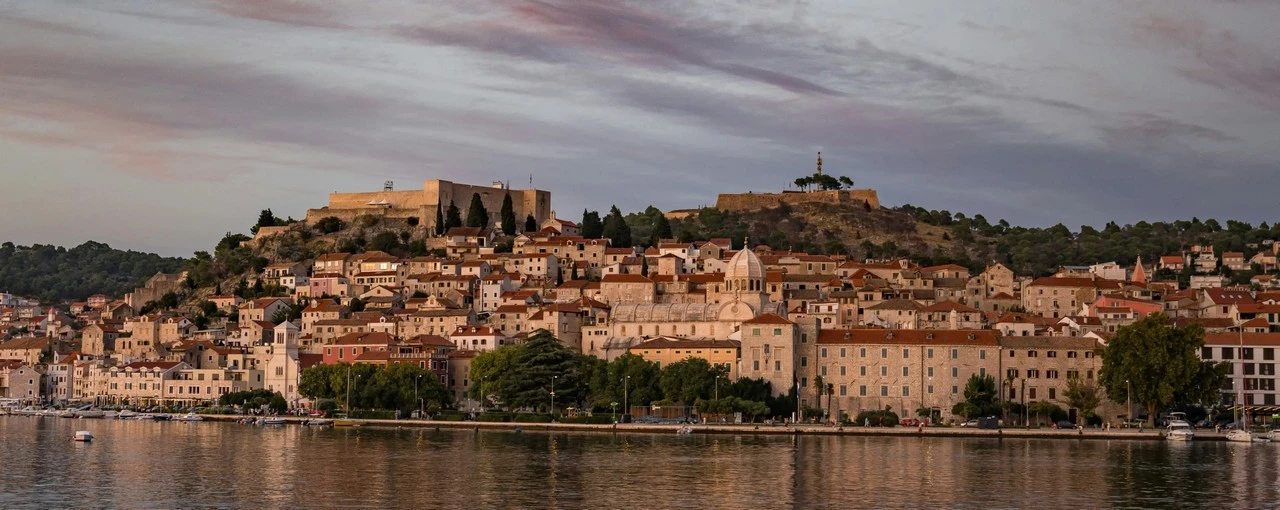
Šibenik's city center has of 24 churches, 17 palaces, 6 monasteries, museums, galleries, portals, butes and many interesting specific details and stories that can be discovered while walking through its picturesque streets. The most influential architect of the historic core was Juraj Dalmatinac, one of the greatest European builders and artists of that era. Old Šibenik is a standing testiment to history!
Most of Šibenik's treasures can be seen and experienced while walking along the ancient streets, but it is also worth visiting its museums, churches, historical collections and galleries, where many unexpected surprises and unique spiritual experiences are hidden.
https://www.sibenik-tourism.hr/lokacije/stara-gradska-jezgra/3.html
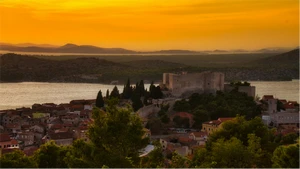
The oldest city fortress is an important cultural and historical monument in Šibenik. The medieval fortress is the origin of the city, which was first mentioned in history in 1066, and was built to control and defend the Sibenik lagoon and the mouth of the Krka River.
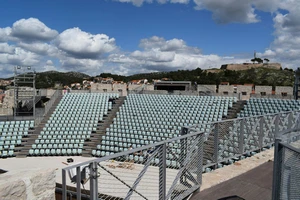
Today, you can tour the fortress with an audio guide and view 3D mapping projections in its interior. It is recognizable for its stage with 1077 seats under the open sky, which is one of the most sought after theaters in Croatia.
Barone fortress was built in the summer of 1646, parallel to the nearby fortress of St. Ivan. They were built by the citizens of Šibenik in less than two months, in order to strengthen the defense of the city against the Ottomans.
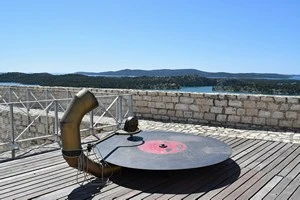
Today, it is a place where, with the help of augmented reality technology, you can look into the past of Šibenik.
Barone bar is perfect for the first morning coffee or a drink with the sunset, and summer evenings at Barone are reserved for jazz concerts, dance performances or movie nights under the starry sky.
The Fortress of St. Ivan was built during August and September 1646, in just 58 days, as the main point of a new defense system of the city, with the Ottoman armies looming on the horizon. The fortress was built by the people of Šibenik, according to the design of the engineer from Genoa, Fr. Antonio Leni.
Revitalized today, it has an educational campus in its underground sectoin. In the warm months, this is a cafe where you can have a coffee or a drink with a view of the city and the surrounding area.
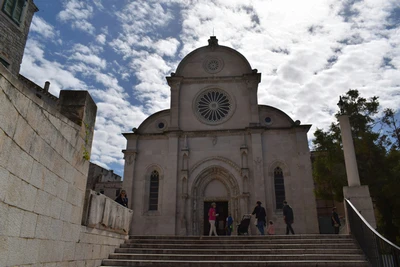
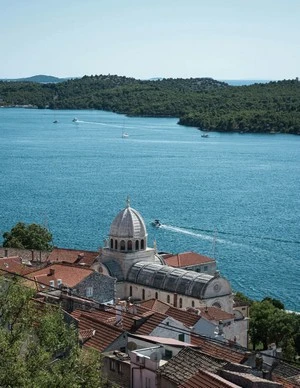
Cathedral of St. Jakov in Šibenik is one of the most significant and beautiful architectural achievements in Croatia, and in 2000 it was included in the UNESCO list of world cultural heritage.
It was built over the course of one hundred years, during the 15th and 16th centuries, and is unique in that it is completely built of stone and without the use of binding material (mortar).
The most notable builders of the cathedral are Juraj Dalmatinac and Nikola Florentinac.
During the century-long period of construction, the cathedral was constructed in three different styles: Gothic, Gothic-Renaissance and Renaissance. The imposing dome that was damaged in the Croatian War of Independence, and today is a kind of symbol of Šibenik, stands out for its beauty.
Civitas Sacra https://civitassacra.hr/ is an interpretation center that summarizes the rich history of the Šibenik diocese and tells visitors the story of the special features of the construction of the Šibenik cathedral, which brought a revolution in the architecture of that time, and the significance of the building for the history of Šibenik.
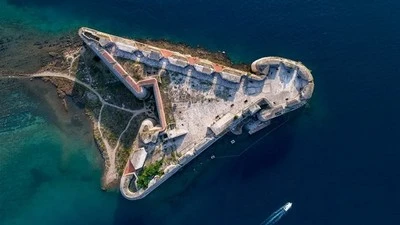
A UNESCO pearl in the protected natural area of the Canal of St. Ante in Šibenik.
Fortress of St. Nikola is a unique monument of world architectural heritage that was inscribed on the UNESCO World Heritage List in 2017 under the nomination 'Defensive systems of the Republic of Venice in the 16th and 17th centuries'.
It opened its doors to visitors in mid-June 2019. Visits to the Fortress of St. Nikola, due to the demanding restoration and conservation works, are only possible by sea at present, and you can find all the information on their websitehttps://www.kanal-svetog-ante.com/hr/posjet-tvrdavi-sv-nikole
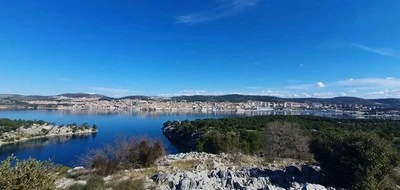
Promenade through the channel of St. Ante offers stunning
panoramic views of the Šibenik archipelago.
In addition, you can also swim here, and during the summer months you will not
encounter large crowds.
The promenade connects the area from the bay of Paninkovac to the islet of Školjić in front of the Fortress of St. Nikola. The promenade can be reached by car, on foot or by bicycle, and the tour takes about two hours.
Visitor center 'Kanal St. Ante' is located in the bay of Minerska. It is an important place for the presentation of biodiversity and natural and cultural values of the protected areas of Šibenik-Knin County, intended to inform and educate visitors.
All the information that can be seen there, can also be found on their official website:
https://www.kanal-svetog-ante.com/hr/kanal-sv-ante
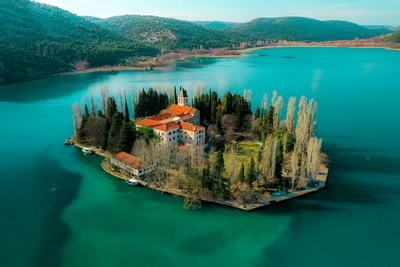
Krapanj is the lowest and smallest inhabited island in the Adriatic. Its highest elevation does not exceed 1.25 m. It is only 300 m from the mainland (only 320 meters from the coast of Brodarica) and is connected by a boat line that runs every hour in the summer months. The ride takes only 3 minutes.
A visit to this island will give you an unforgettable experience of peace in a beautiful natural environment. Here you will feel time passing more slowly, allowing you to completely relax and enjoy every moment. There is no hustle and bustle or car noise, which makes this island an ideal destination for families with children.
Do not miss visiting the monastery of St. Cross and its valuable and protected exhibits, where you can see a small gallery of dishes, amphorae, corals and sponges, the Museum of Diving in Hotel Spongola. It is also a great idea to have dinner in one of the famous Krapanj taverns, because the evenings on Krapanj are really beautiful.
Zlarin is a small, undiscovered gem of our coast with untouched nature and extremely rich cultural and historical heritage. It abounds in rich historical, cultural and natural treasures, especially churches where the altars are decorated with gold and branches of red coral, which sailors left as offerings to the church.
It is also known as the “coral island”. A less well-known piece of local cultural heritage and centuries-old specialty of Zlarin is coral farming. If you decide to visit this island, you should certainly visit the Croatian Coral Center of Zlarin.
There is an organized ferry line to Zlarin, and you can find all the information on the website:
https://www.jadrolinija.hr/hr/putovanja.
Krka National Park is located in Šibenik-Knin County and covers an area of 109 km² along course of the Krka River and the lower course of the Čikola River. It was declared a national park in 1985.
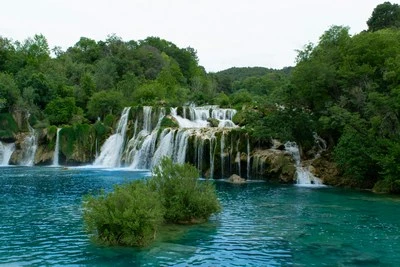
Krka National Park encompasses the area along the Krka River, which flows through a deep and colorful canyon more than 75 km long and forms noisy waterfalls, such as the magnificent Roški Slap and the fantastic Skradinski Buk (45.7m), the largest travertine cascades in Europe.
The Krka River is a unique natural and karst phenomenon, with seven waterfalls and a total drop of 224 m. You can find all the information on how to visit this beautiful place on the website. Our advice is to go sightseeing as early as possible during the summer months to avoid crowds and strong sun.
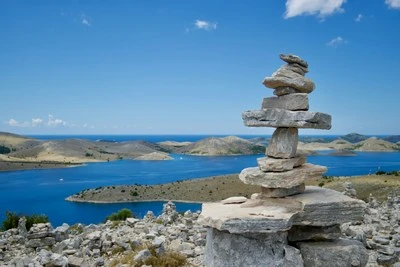
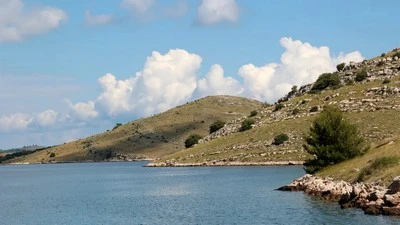
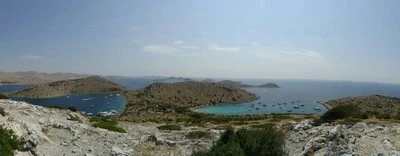
In the central part of the Croatian Adriatic, between the cities of Šibenik and Zadar, there is a special archipelago called Kornati. Because of the exceptional landscape beauty, the interesting geomorphology, the great indentation of the coastline and the particularly rich biocenoses of the marine ecosystem, in 1980, a large portion of the Kornati marine area was declared a national park.


Today, Kornati National Park occupies an area of about 220 km2 and includes a total of 89 islands, islets and rocks along approximately 238 km of coastline. Despite this relatively large number of islands, the land part of the park makes up less than 1/4 of the total area, while everything else is the marine ecosystem.
The selection of cafes and beach bars is really diverse, and the closest to us are Dinos beach bar, right on the beach near the accommodation, and beach bar Vagabundo, both excellent choices for your morning coffee.
For daily meals and pizza, we can recommend the restaurants in Brodarica, which are in the immediate vicinity of our apartments, just a five-minute walk away:
The entire Šibenik area has an incredibly rich and diverse gastric selection that can satisfy gourmets of all tastes. Dalmatian home-made dishes, Drniš prosciutto, fish specialties, good wine, dried figs, olives, olive oil, these are all delicacies for which our region is known.
In the center of Šibenik, you can choose from Michelin award-winning restaurants, authentic Dalmatian taverns, and modern Mediterranean bars.
We will single out some of them for you: